What happens when a sump pump fails?
A sump pump is designed to move collected water away from a basement or foundation drainage system. When the pump stops working or cannot keep up, water can rise in the sump basin and spread onto the basement floor. The amount of damage depends on how quickly the problem is discovered, how much water is entering, whether the basement is finished, and whether the discharge system is functioning correctly.
A failed pump is not the same thing as a complete cleanup plan. Replacing or restarting the pump may stop additional water from entering the basement, but it does not remove moisture that has already moved into carpet, wallboard, trim, cabinets, stored items, flooring, or framing. That is why this page supports the larger flooded basement cleanup Center.
Why do sump pumps stop working?
There is no single cause. Some failures are electrical. Others are mechanical. A float switch can stick. A discharge pipe can freeze or become blocked. A check valve can fail. Debris can interfere with the pump. The pump may simply be unable to keep up with the volume of incoming water. In some cases the pump itself operates but water is not being discharged effectively away from the building.
- Power outage or tripped circuit
- Mechanical pump failure
- Float switch obstruction or malfunction
- Frozen or blocked discharge line
- Check-valve problem
- Excessive inflow beyond pump capacity
- Debris or sediment interfering with operation
- Improper discharge conditions
Identifying the actual failure mode matters because prevention should address the cause instead of simply replacing equipment without understanding why the basement flooded.
What should you do first after discovering a sump problem?
Check safety conditions before entering standing water. If water is near electrical equipment, outlets, cords, appliances, or the service panel, do not enter until the electrical risk is addressed. If the pump is accessible without entering water, you may be able to confirm whether it has power or whether the float is obviously stuck, but do not dismantle equipment in unsafe conditions.
If the water level is rising, stopping additional inflow may require restoring pumping or using an appropriate temporary pumping method. Once the source is controlled, the focus shifts to the basement itself. Photograph the water level and affected materials, move dry contents away from the wet zone where practical, and begin planning extraction.
How is sump-pump water removed from a basement?
Water is removed according to depth, area, material type, and access. Open standing water may be pumped or extracted. Carpeted areas may require specialized extraction. Water beneath floating floors may need access that surface extraction cannot provide. The objective is to reduce the bulk water load first, then identify what materials retained moisture.
Our emergency water removal page explains the extraction stage in more detail. The key point is that extraction and pump repair are different tasks. One fixes the mechanical problem; the other addresses the water already in the structure.
What parts of a basement should be inspected?
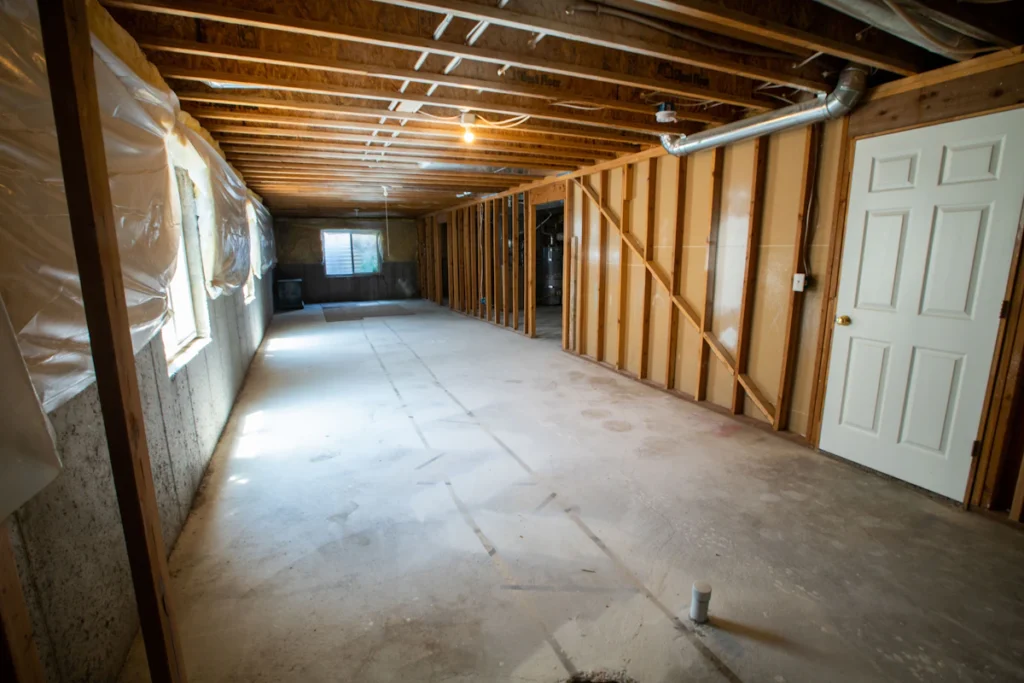
The visible water line is only one clue. Wallboard can wick moisture. Baseboards can hide wet wall edges. Insulation can retain water behind intact surfaces. Carpet and pad can stay damp well beyond the visible boundary. Cabinets and built-ins may trap water beneath them. Stored cardboard boxes can absorb water and transfer moisture to nearby contents.
Mechanical rooms also deserve attention. Furnaces, water heaters, electrical equipment, and other systems can be affected by standing water even when they appear functional. Appropriate specialists may be needed for those systems.
Can wet basement materials be saved?
Sometimes. Salvage decisions depend on the water quality, amount of saturation, duration, material condition, and whether the material can be cleaned and dried. Clean water from a drainage or sump system is not automatically equivalent to potable water, and any questionable contamination should be considered during cleanup planning.
Wood framing often can dry if it remains structurally sound and receives adequate airflow. Drywall may dry in some circumstances but may need removal if it is heavily saturated, deteriorated, contaminated, or trapping wet insulation. Carpet and pad decisions depend on the source and condition. Laminate or engineered flooring may swell or delaminate after prolonged exposure.
How does structural drying follow a sump failure?
Once standing water is removed, the drying stage begins. Air movement promotes evaporation from wet surfaces. Dehumidification removes moisture from the air. Access may be created to wet cavities where natural airflow cannot reach. Moisture readings are compared over time to determine whether materials are responding to the drying plan.
This is particularly important in finished basements because water can move beneath finishes. A room may smell normal and look dry while a wall base or flooring assembly remains elevated. Visit the structural drying page for the detailed process.
What is the difference between a sump failure and a sewer backup?
A sump system typically handles groundwater or drainage water collected around the foundation. A sewer backup involves wastewater returning through a drain, toilet, or sewer connection. The two events can both put water on a basement floor, but the contamination risk is very different.
If sewage or waste is present, do not treat the event as ordinary sump-pump cleanup. Use the sewage backup cleanup page because porous-material decisions, personal protection, cleaning, and disposal practices may change.
Can a backup sump pump prevent every flood?
No system can guarantee that a basement will never flood. A backup pump can reduce risk in certain failure scenarios, especially loss of primary-pump power or primary pump malfunction, but it must be selected, installed, and maintained appropriately. The discharge route still needs to work. If the water volume exceeds the system’s capacity, multiple functioning pumps may still be challenged.
Backup options can include battery-powered systems, water-powered systems where appropriate, or secondary electric pumps. The best choice depends on the building, drainage conditions, utilities, and failure mode you are trying to address.
How can sump-pump problems be caught earlier?
Routine inspection can identify some obvious issues before a storm or thaw. Confirm the basin is accessible, the float can move, the discharge line is not visibly blocked, and the pump activates when tested according to manufacturer instructions. Listen for unusual cycling or continuous operation. Check whether water is discharging away from the foundation instead of returning toward it.
Seasonal conditions matter in Minnesota. A discharge line exposed to freezing temperatures can create problems even if the pump itself is functional. Snow placement and exterior drainage can also influence how much water reaches the foundation area during thaw periods.
What should be documented after a sump-related water loss?
If insurance may be involved, photograph the sump basin, water level, affected rooms, damaged contents, and visible materials before major removal when safe. Note whether the pump had power, whether the discharge was blocked, and when the water was discovered. Keep service invoices and cleanup records.
Some policies treat sump or water-backup losses differently from sudden plumbing losses. Coverage is policy-specific. Ask the carrier about the exact source and any endorsements rather than assuming a general water-damage provision applies.
When should you request professional help?
Consider professional cleanup when standing water covers a meaningful area, the basement is finished, water reached walls or flooring, the source is uncertain, electrical equipment is involved, water has been present for an unknown period, or you cannot remove and dry the affected materials effectively. A small amount of clean water caught immediately may be manageable, but a wet finished basement is a more complex loss.
The service request should include what you know: whether the sump is operating now, approximate water depth, which rooms are affected, whether carpet or walls are wet, and when the problem was discovered. That information helps determine whether the first priority is pumping, extraction, wall access, drying, or contamination assessment.
Frequently asked questions about sump pump failures
Why is my sump pump running but the water level is still rising?
The inflow may exceed pump capacity, the discharge route may be restricted, the pump may be losing performance, or water may be returning to the basin. The system should be evaluated rather than assuming continuous operation means effective discharge.
Can a frozen discharge line cause a basement flood?
Yes. If discharge cannot leave the system effectively, the sump basin can fill even though the pump attempts to operate. Freeze protection should be considered as part of the overall design.
Should the basement be dried before replacing flooring?
Yes. New finishes should not be installed over materials that remain wet. Moisture conditions should be verified before reconstruction.
Does a sump-pump failure always mean groundwater entered?
Not necessarily. The sump may be part of a drainage system collecting water from around the foundation, but other basement sources can occur at the same time. Source confirmation is important.
What page should I read if the basement is already flooded?
Start with the flooded basement cleanup page for the full cleanup sequence, then use this sump page to understand the cause and prevention considerations.
Local service questions
What should I tell you about a sump-related basement flood?
Provide the property city, whether the pump is running, whether water is rising and which rooms or materials are wet. Inquiries can cover Lauderdale and nearby Twin Cities properties, subject to confirmation. Do not handle electrical equipment while standing in water or enter a flooded area to inspect the pump.
Is pump repair included in sump-pump water-damage cleanup?
Cleanup and pump repair are separate scopes. An appropriate plumber or sump-system professional may need to correct the pump or discharge problem. The resulting water damage can still require extraction, material assessment and drying. Confirm which tasks are included before agreeing to work at the property.