Why basement water needs a focused cleanup plan
A basement is not simply another room. Water tends to collect at the lowest level of a building, and many basements contain materials that can hold moisture out of sight. Finished walls may have insulation and framing behind the drywall. Carpet may have padding underneath. Floating floors can trap water beneath planks. Cabinets, storage shelves, and utility areas can complicate access. Even unfinished basements can have porous concrete, sill plates, framing, mechanical equipment, and stored belongings that need attention.
The important question is not just how much water is visible, but where it came from, how far it traveled, and which materials stayed wet. Those details help determine whether the next step is extraction, drying, material removal, cleaning, or a combination of those services.
What commonly causes a wet or flooded basement?
Basement water can come from several sources, and the source matters because it affects both cleanup and prevention. A failed sump pump may allow groundwater or drainage water to rise. A frozen or burst pipe can release clean water quickly. A washing machine, water heater, utility sink, or other appliance can leak. Surface water can enter around penetrations or low areas. A floor drain or sewer line can back up and introduce contaminated water.
- Sump pump failure or loss of power
- Heavy rain or snowmelt combined with drainage pressure
- Broken or frozen plumbing
- Water heater or appliance leaks
- Foundation or utility penetration seepage
- Floor drain or sewage backup
- Overflow from plumbing fixtures
Because these causes are different, the first question is not simply “how much water is there?” It is also “where did the water come from?”
What should you do first when a basement floods?
Protect people before property. If water is near electrical equipment, outlets, extension cords, appliances, or the service panel, do not enter the area until the electrical risk is addressed. If sewage is involved, avoid direct contact and keep children and pets away. If the source is a plumbing line and the shutoff can be reached safely, stopping the flow can prevent additional damage.
Once immediate hazards are controlled, document the scene. Take photos of water depth, affected rooms, visible material damage, and the suspected source. Move dry, lightweight belongings away from the wet area when practical. The Minnesota Department of Health’s flood-cleanup guidance also recommends documenting damage and addressing contaminated or porous materials carefully after flooding.
How is standing water removed from a basement?
Water extraction is usually the first active cleanup stage after safety and source control. Depending on the depth and area, extraction may use pumps, wet extraction equipment, or specialty tools for carpeted surfaces. The objective is to remove bulk water quickly enough that the drying stage can focus on what materials absorbed.
Basement layout affects the process. Stairs, narrow doors, utility rooms, finished partitions, and stored contents can limit access. Water may also hide beneath flooring or in adjacent rooms. Removing the visible puddle is not proof that the basement is ready for reconstruction.
For details on the liquid-removal stage, see emergency water removal in Lauderdale.
What materials need to be checked after basement flooding?
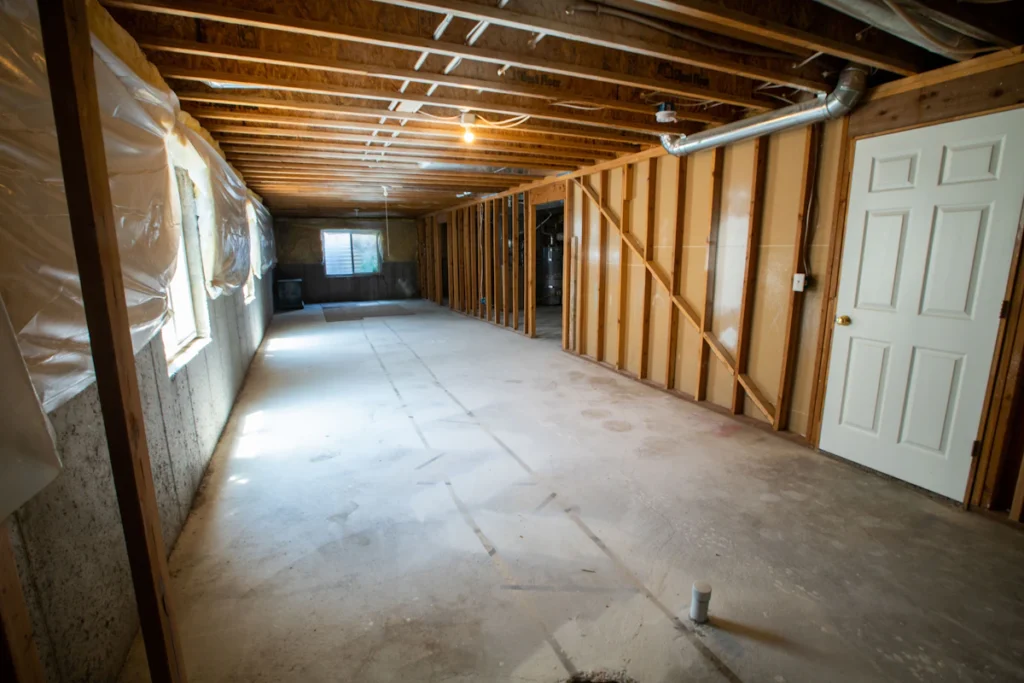
Any material that contacted water or sits next to a wet assembly may need evaluation. Drywall can wick moisture upward. Baseboards can hide a wet wall edge. Insulation may retain water behind apparently intact drywall. Carpet padding can stay wet after the carpet surface begins to feel better. Laminate and engineered flooring can swell or trap moisture below the wear layer.
Wood framing may be able to dry, but it should be monitored rather than enclosed while still wet. Concrete can hold moisture without looking saturated. Cabinets and built-ins can trap water in toe kicks and against walls. Stored cardboard boxes can absorb water and transfer it to nearby contents.
Does all wet drywall need to come out?
No. The decision depends on the source, amount of wetting, material condition, insulation, duration, and access for drying. Clean-water exposure discovered quickly may allow some drywall to dry in place. Drywall that is crumbling, delaminated, heavily saturated, contaminated, or trapping wet insulation may need removal. Cutting into walls should be purposeful, not automatic.
A useful rule is that the cleanup strategy should create access where access is actually needed while preserving sound materials when that can be done safely and effectively. Moisture readings and material condition support that decision.
What if the flood started with a sump pump failure?
A sump pump may stop because of a power outage, mechanical failure, float problem, blocked discharge, frozen discharge line, overwhelming inflow, or another system issue. Restoring pump operation may control the source, but the basement still needs cleanup if water already spread across the floor.
Visit the sump pump failure page for cause-specific guidance, then return here for the broader basement cleanup process.
How does basement structural drying work?
After extraction, the project transitions to drying. Air movement helps moisture leave wet surfaces. Dehumidification lowers moisture in the air so evaporation can continue. The equipment plan depends on the size of the area, materials involved, temperature, humidity, and how open the assemblies are.
Finished basements often require extra attention to enclosed wall bases and flooring systems. Unfinished basements may have fewer finishes but still contain wet framing or concrete. Drying should be monitored over time. A basement that smells less damp is not necessarily fully dry, and a dry-looking wall may still contain moisture behind the surface.
Our structural drying page explains moisture monitoring and why verification should be based on more than appearance.
What changes if sewage is involved?
If the water came from a sewer line, floor drain backup, toilet overflow involving waste, or another contaminated source, the cleanup approach changes. Personal protective equipment, controlled removal, cleaning, disposal, and cross-contamination prevention become more important. Porous materials exposed to sewage may not be candidates for normal in-place drying.
Do not treat sewage water as ordinary basement flooding. Use the sewage backup cleanup page for the contamination-specific process.
How can you reduce future basement water risk?
Prevention depends on the cause. If a sump system failed, inspection of the pump, float, discharge route, check valve, power supply, and backup strategy may be appropriate. If plumbing caused the loss, the failed component should be repaired and nearby vulnerable connections reviewed. If surface water or seepage is suspected, drainage, grading, gutters, downspouts, foundation conditions, and exterior water pathways may deserve evaluation.
Prevention should be based on evidence from the actual loss. Recommending a new sump pump for a sewer backup would miss the point. Likewise, improving exterior drainage does not repair a leaking supply line. Identify the cause first, then choose the prevention strategy.
What should be documented for an insurance claim?
If insurance may be involved, document the source and conditions before discarding materials when safe. Photograph standing water, wet finishes, contents, the sump or plumbing source, and any visible damage. Keep a timeline of when the water was discovered and what emergency actions were taken. Retain drying records, invoices, and material-removal notes if available.
Coverage varies by policy. Sump or sewer backup coverage can differ from sudden plumbing-loss coverage, and flood insurance is a separate issue from many homeowners policies. Ask the carrier about the specific cause rather than assuming all basement water is treated the same.
When should you request professional flooded basement cleanup?
Professional help becomes more important when water covers a large area, reaches finished materials, may be contaminated, involves electrical risk, has been present for an unknown period, or has spread under flooring and into wall assemblies. A small clean-water spill caught immediately may be manageable with household methods. A finished lower level with wet walls and floors is a different situation.
If you are unsure, describe the source, approximate area, water depth, materials affected, and whether the source has stopped. Those details help determine whether the first priority is pumping, extraction, contamination control, structural drying, or material removal. You can also review our Lauderdale water damage restoration process for the broader sequence from assessment through drying.
Frequently asked questions about flooded basements in Lauderdale
Can a flooded basement dry without removing flooring?
Sometimes, but it depends on the flooring type and whether water is trapped underneath. Floating floors and saturated padding may prevent effective drying without access.
How high can moisture travel in drywall?
Drywall can wick moisture above the visible water line. The amount varies with exposure time, material condition, and water depth, so inspection should extend beyond the obvious stain.
Should I throw away everything that got wet?
No. Salvage decisions depend on the item, water source, duration, material, value, and ability to clean and dry it. Sewage exposure changes what can reasonably be retained.
What if the basement has no standing water anymore?
Check for retained moisture in carpet pad, walls, trim, flooring, stored contents, and enclosed cavities. Evaporation can remove the puddle while materials remain wet.
Is a sump pump failure the same as sewer backup?
No. Both can cause basement water, but the source and contamination level are different. Correctly identifying the source affects cleanup and insurance questions.
Local service questions
Can I request basement flood cleanup for a nearby Twin Cities property?
Yes, you can send a basement-cleanup inquiry for Lauderdale, Falcon Heights, Roseville, Saint Anthony or a nearby Minneapolis or Saint Paul property. Include the city, whether water is still entering and the affected finishes. Coverage, equipment needs and scheduling are confirmed after reviewing the location and loss.
Does pumping out basement water finish the cleanup?
Not necessarily. Carpet padding, wall bases, insulation and flooring layers can remain wet after pumping. Basement cleanup should account for the source, contamination and moisture retained in materials. Ask how those areas will be assessed and when the remaining structure will be ready for repairs.