Why can mold develop after water damage?
Mold spores are naturally present in indoor and outdoor environments. Growth becomes more likely when moisture, suitable temperature, and a food source are available. Drywall paper, dust, wood, cardboard, fabric, and many other building materials can provide nutrients. Water damage supplies the missing ingredient: moisture.
The timing varies. There is no reliable promise that mold always appears at a specific hour after a loss, but prolonged dampness increases the risk. The Minnesota Department of Health’s mold and moisture guidance emphasizes moisture control as the key step in preventing recurring mold problems.
What signs may suggest a moisture problem remains?
Visible mold is only one sign. A persistent damp or musty odor can indicate that materials are not fully dry or that microbial growth is present in a concealed area. Staining, peeling paint, swollen trim, soft drywall, condensation, warped flooring, or recurring humidity can also point to unresolved moisture.
None of those signs proves the exact cause by itself. A musty odor can come from wet carpet or stored contents. A wall stain can be old. Moisture measurement and inspection help determine whether the condition is active.
Should mold be treated before the water source is fixed?
The water source should be controlled as part of any durable solution. Cleaning visible growth while a pipe continues leaking or a basement remains wet will not solve the underlying problem. The same applies to repeated condensation or chronic seepage. Moisture control and material cleanup need to work together.
If the source is an active plumbing leak, repair comes first. If the loss is a flooded basement, standing water removal and drying are essential. If the issue is a sump failure, pump and discharge problems should be corrected. Visit our water damage restoration service page for the complete sequence.
Can wet materials be dried instead of removed?
Sometimes. Clean, structurally sound materials that can be accessed and dried may remain. Other materials may be difficult to salvage if they have visible growth, contamination, loss of integrity, or trapped moisture. Porous materials generally require more careful evaluation than hard, nonporous surfaces.
Drywall may be dried when exposure is limited and conditions are favorable, but material with widespread growth or deterioration may need selective removal. Wood framing can often be cleaned and dried if it remains sound. Carpet, padding, insulation, and composite products vary widely in how they respond.
Why is containment important when mold is disturbed?
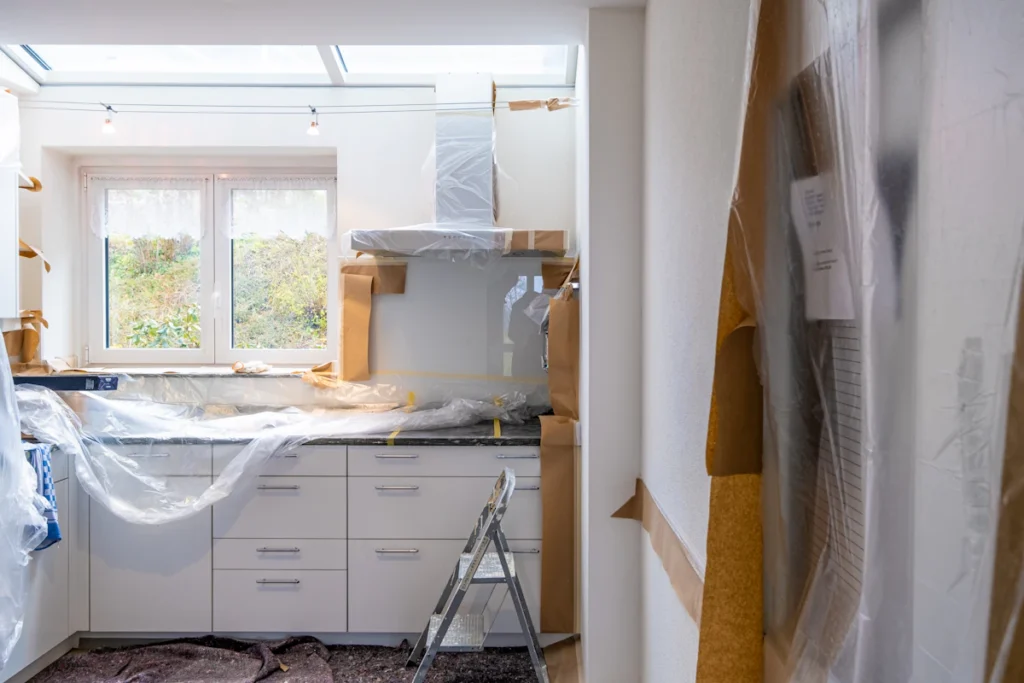
Disturbing moldy material can release particles into the air and move dust into nearby spaces. The amount of containment needed depends on the size and location of the affected area, but the general principle is to keep debris and dust from spreading unnecessarily.
This is also why indiscriminately pointing fans at suspected growth is not always a good idea. Air movement is useful for structural drying, but it should be planned so it does not carry contamination from an affected zone into clean areas.
What is the role of structural drying?
Structural drying reduces the moisture conditions that allowed the problem to develop. Air movement, dehumidification, selective access, and monitoring can be used after the water source is controlled and contaminated materials are addressed appropriately. Drying should be verified rather than assumed.
The structural drying page explains how moisture can remain inside walls, floors, and other assemblies even after the visible water is gone.
Do you need a mold test after every water loss?
No. Testing can be useful in specific situations, but it is not automatically required after every water event. When visible growth is present and the moisture source is known, the priority may be correcting the source and addressing affected material rather than testing to confirm that visible mold is mold.
Testing may be more useful when the source is unclear, occupants have specific concerns, a dispute requires documentation, the suspected area is concealed, or a qualified professional recommends sampling for a defined reason. Sampling should answer a question; it should not be treated as a substitute for fixing moisture.
What if mold is inside a wall?
Concealed growth may be suspected when there is persistent odor, a history of water intrusion, or moisture readings that remain elevated without visible explanation. Opening a wall should be purposeful because demolition can spread dust and create unnecessary damage. A controlled inspection area may provide enough information to determine whether broader access is needed.
If insulation is wet or growth is visible on the back of drywall, selective removal may be appropriate. The surrounding framing and cavity should then be cleaned and dried before new finishes are installed.
How is mold on hard surfaces different from porous material?
Hard, nonporous surfaces can often be physically cleaned more effectively because contamination remains near the surface. Porous materials can hold growth and moisture within the material. Cleaning methods therefore depend on what the material is, how deeply it is affected, and whether it can be dried.
Painting over visible mold is not a cleanup method. Coatings can hide staining while leaving moisture or contamination behind. The surface should be properly addressed before refinishing.
What about mold after a sewage backup?
Sewage adds contamination that changes the cleanup approach. The priority is not simply mold prevention; it is removal and cleaning of sewage-contaminated material, followed by drying. Porous materials exposed to sewage may require removal regardless of whether visible mold has developed.
Use the sewage backup cleanup page when wastewater is involved. That page focuses on sanitation, disposal, and cross-contamination in addition to moisture.
How can homeowners reduce mold risk after a basement flood?
Start with prompt source control and water removal. Wet contents should be separated so they do not keep the room humid. Carpet and padding should be evaluated. Wall bases and finished cavities should be checked for retained moisture. Dehumidification can help manage the large amount of water vapor released during drying.
A basement that feels cool can still be humid. Running heat without dehumidification may increase evaporation but leave the moisture in the air. Effective drying manages both the materials and the surrounding environment.
What should be documented?
Photos of the water source, affected area, visible growth, material removal, and final condition can be helpful. Moisture readings and drying records can show how the environment changed. If a mold specialist or environmental consultant is involved, keep their reports with the project file.
If insurance is involved, coverage for mold can be limited or handled differently from the original water loss. Ask the carrier about policy terms rather than assuming the mold portion is automatically included.
When should professional mold or water-damage help be considered?
Professional help becomes more important when growth covers a significant area, contamination is inside HVAC components, the source is sewage, moisture is concealed, occupants have special health concerns, or the building continues to smell damp despite drying efforts. A small amount of surface growth in a straightforward situation can be different from a wall cavity affected by a long-term leak.
This website does not provide medical diagnosis. If someone has symptoms or health concerns, consult a qualified health professional. The restoration goal is to correct the building moisture problem and address affected materials appropriately.
Frequently asked questions about mold after water damage
How fast can mold grow after a leak?
Growth rate varies with moisture, temperature, material, and environmental conditions. The practical takeaway is to dry wet materials promptly rather than relying on a fixed hour threshold.
Will a dehumidifier kill mold?
No. A dehumidifier reduces moisture in the air and can help create drier conditions, but it does not remove existing growth from affected materials.
Can mold grow under flooring?
Yes. Water trapped beneath flooring can keep underlayment, subfloor, or debris damp. Inspection may be needed when moisture readings, swelling, odor, or a known water pathway suggests concealed wetting.
Is black-colored mold always more dangerous?
Color alone does not identify species or determine risk. Any persistent growth should be addressed by correcting moisture and cleaning or removing affected material appropriately.
Should I paint over a stained wall after a leak?
Only after the source is fixed and the wall is verified dry. Paint can hide a stain but cannot correct wet material or active microbial growth.
Local service questions
What information helps with a persistent-dampness inquiry?
Describe the earlier leak, whether the source was corrected, the affected rooms and any persistent odor or visible material changes. Include the property city so Lauderdale or nearby Twin Cities coverage can be checked. Do not open cavities or disturb suspected growth just to provide photos for the request.
Does this website diagnose mold-related health symptoms?
No. These pages discuss moisture and building-material concerns, not medical diagnosis. A qualified health professional should address health symptoms. For the property, explain the water history and visible conditions so the need for moisture assessment or appropriate specialist involvement can be discussed.